
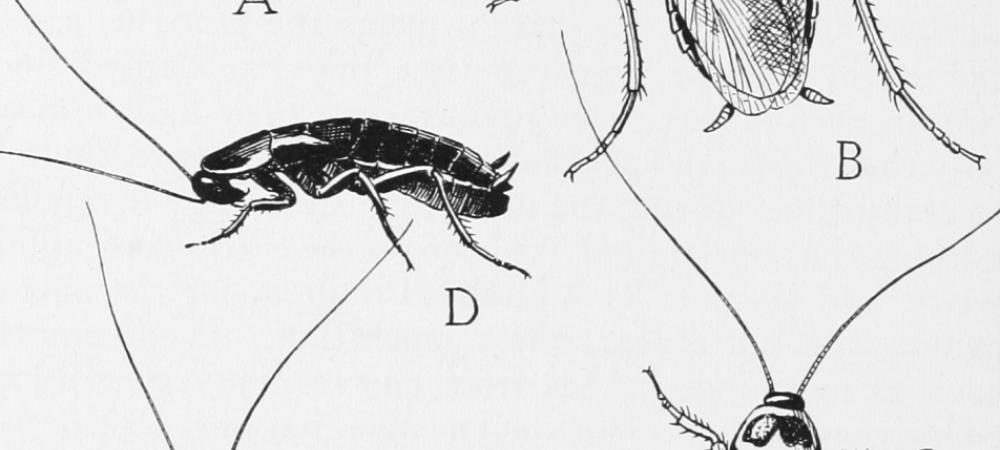
Cockroaches maintain a persistent, unwelcome presence across virtually every geographical region where human habitats are established. Encountering an active structural introduction inside your home introduces a double layer of liability to your household property. Not only are these resourceful scavengers highly destructive—consuming diverse organic matter ranging from pantry dry goods to cellulose-rich drywall papers—but they also act as mechanical vectors for dangerous public health pathogens. Furthermore, their microscopic shed skins, egg capsules, and localized fecal accumulations release potent airborne allergens that can severely aggravate asthma and chronic respiratory sensitivities across a household.
While entomologists have classified well over 4,500 distinct species of cockroaches globally, only a small handful actively conflict with homeowners across the southeastern United States. In central North Carolina, our unique blend of heavy seasonal humidity and warm winter microclimates provides a premium incubator environment for these resilient insects to thrive. Managing these persistent invaders demands an advanced, target-specific strategy, which is why Triangle Pest Control delivers comprehensive, professional solutions designed to help you achieve long-term population suppression.
The Primary Species of Cockroaches in North Carolina
Successfully protecting your perimeter requires a clear understanding of the specific species testing your baseline defenses. Each variety exhibits entirely separate behavior patterns, structural preferences, and moisture dependencies:
- American Cockroach (Periplaneta americana): This stands as the largest structural cockroach species encountered locally. It is widely recognized by its elongated, reddish-brown body profile and a distinctive pale-yellow band outlining the shield directly behind its head. Across North Carolina, this insect is frequently called the “waterbug”—though this is a regional nickname rather than a true scientific classification. American cockroaches are highly opportunistic feeders that consume almost any organic residue, ranging from decaying leaves to plumbing film. While they are primarily nocturnal, overcrowding can drive them into open daylight views. Suppressing this species demands rigorous structural exclusion alongside targeted micro-encapsulated residual barriers and granular bait applications.
- Brown-Banded Cockroach (Supella longipalpa): Possessing an extreme aversion to open light, these elusive insects operate almost exclusively under the cover of total darkness. They are visually distinguished by two prominent, light-colored horizontal bands sweeping across their wing covers. Unlike moisture-driven species, brown-banded cockroaches prefer hot, completely dry microclimates elevated high off the floor—frequently nesting inside upper kitchen cabinetry, bedroom closet corners, and the internal housing of electronic appliances. Because they scatter their nesting clusters in highly unconventional spaces, achieving control requires meticulous crevice dusting, target-specific gel baits, and expert monitoring.
- German Cockroach (Blattella germanica): This narrow, tan-colored insect represents the number-one structural pest threat to residential and commercial properties worldwide. German cockroaches are extraordinarily prolific breeders; a single carrying female can trigger an indoor population spike of thousands of insects within a few short months. Because they completely lack tolerance for cold winter weather, they adapt by living exclusively indoors alongside humans, gathering behind stoves, inside dishwasher motor voids, and around plumbing pipes. Over-the-counter retail sprays completely fail against this species and often cause colonies to fracture and scatter. Managing an active German roach introduction requires a professional’s full technical toolkit, combining insect growth regulators (IGRs) with non-repellent transfer matrices to disrupt the reproductive cycle.
- Oriental Cockroach (Blatta orientalis): Frequently referred to locally as the “black beetle” due to their smooth, dark-brown to midnight-black coloration, these heavy-bodied insects are highly associated with damp, decaying environments. Males feature short, non-functional wing covers, while larger females carry small wing pads. They gravitate toward cold, dark, high-humidity zones—including crawl space block walls, floor drains, and damp leaf drifts packing along foundations. Because their feeding habits center heavily on rotting organic matter and sewer slime, they carry a high risk for tracking bacteria into homes. Securing this boundary requires establishing robust, commercial-grade liquid barrier treatments around your home’s exterior foundation masonry.
- Virginia Wood Cockroach (Parcoblatta virginica): Displaying a clean chestnut-brown profile, wood roaches live exclusively outdoors in their natural woodland habitats, feeding on decaying tree bark and mulch layers. They have zero biological drive to colonize indoor living spaces and do not avoid light. Homeowners typically encounter them indoors only when individual male specimens are accidentally carried inside on winter firewood logs, or when adults wander through doorway thresholds during their brief summer mating season thaws. Maintaining a tidy, well-ventilated yard line easily keeps these outdoor insects in check.
Why Professional Mitigation Beats Consumer Retail Failures
Attempting to eliminate an active cockroach population using consumer-grade retail aerosol cans, over-the-counter traps, or generic chemical bombs is an ineffective approach that frequently inflates eventual remediation costs. Topical retail sprays can drop a few visible insects tracking across your tile, but they fail to reach the deep primary aggregations operating behind your drywall insulation. Even worse, the highly repellent active ingredients found in retail bug bombs alarm the insects, triggering a biological defense mechanism that drives them to scatter deeper into inaccessible structural voids, making subsequent control significantly more complex.
Achieving durable, long-term structural protection demands an integrated pest management (IPM) framework built around insect biology. At Triangle Pest Control, our QualityPro certified field specialists provide advanced cockroach control programs custom-tailored to the exact layout of your property. We perform an intensive diagnostic sweep to identify accurate species lines, locate hidden nesting tracks, and apply advanced, non-repellent transfer baits that foraging workers pass throughout the entire colony matrix to neutralize the nest at the true source. Reclaim complete confidence in your home’s sanitation—contact our local expert team today to arrange your comprehensive property evaluation!